
Indoor vs Outdoor Tiles: What to Know Before You Buy
14 July 2026
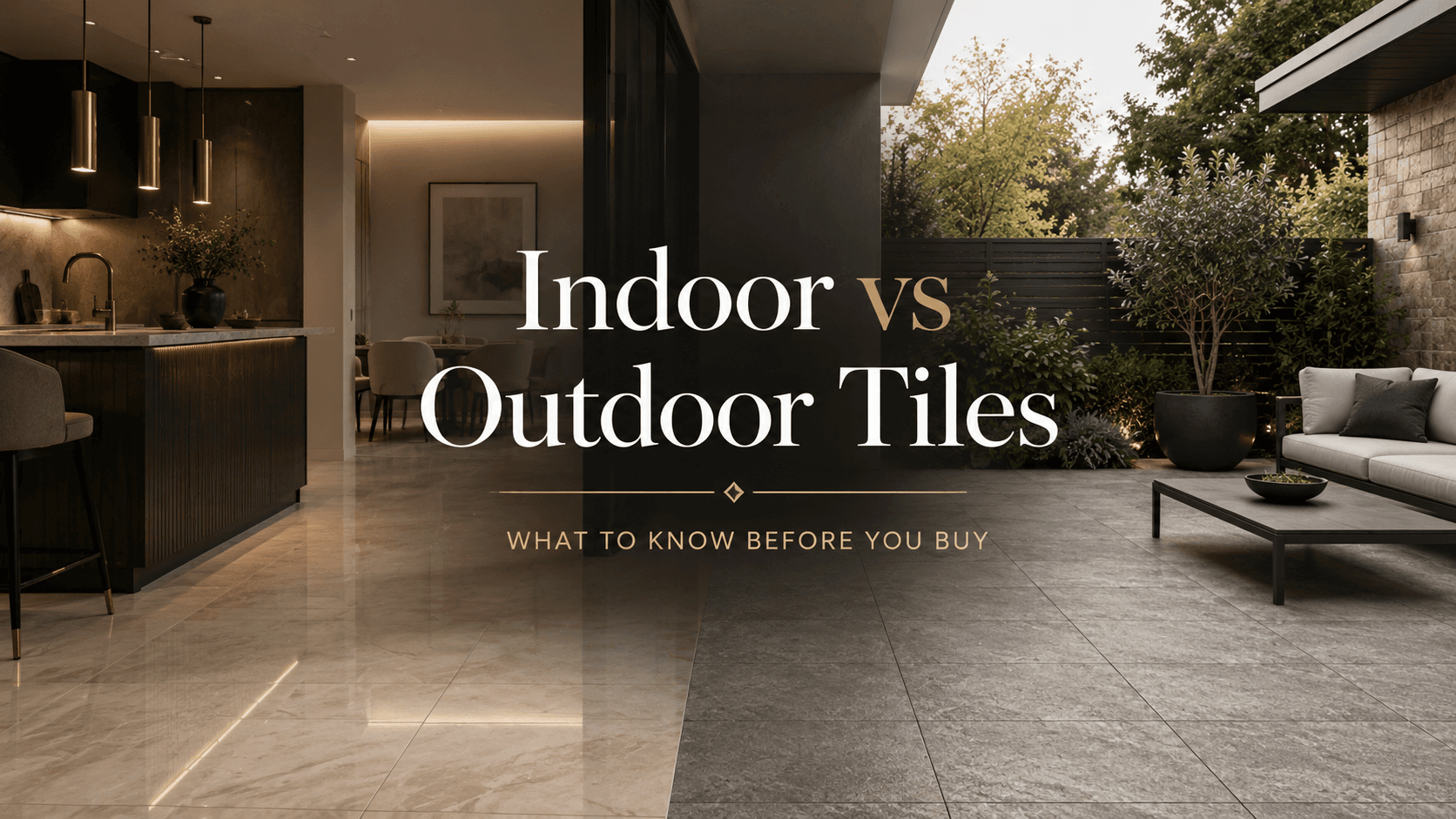
It's tempting to use a tile you love indoors on an outdoor patio too, but outdoor spaces put very different demands on a tile, and using the wrong product can lead to cracking, staining, or a dangerously slippery surface.
The two things that matter most outdoors are frost resistance and slip resistance. Frost resistance means the tile has very low water absorption, so moisture that gets into the tile doesn't freeze, expand, and crack it during winter. Look for tiles explicitly listed as frost-resistant or suitable for outdoor use; full-body porcelain almost always qualifies, while many ceramic tiles do not.
Slip resistance is measured using an R-rating (R9 to R13, from least to most slip-resistant) or a barefoot rating for areas like pool surrounds. For an outdoor patio or path, we'd recommend a minimum of R11, and R12 or above around pools or anywhere that gets consistently wet.
Many of our outdoor porcelain ranges are sold as a matching pair with an indoor equivalent, sharing the same colour and pattern but with a textured, higher-grip surface for the outdoor version. This lets you create a seamless look that flows from an indoor kitchen or living space straight out onto a patio, while still using the correct, safe product in each area.
One more thing to check: outdoor tiles are often thicker (20mm is common) than indoor tiles (typically 8-10mm), which affects both installation method and how they sit against surrounding paving or thresholds. Always check the thickness specification before ordering if you're matching to an existing outdoor level.